Dashboard Warning Lights Explained
Dashboard lights are your car's way of reporting a problem. The colour tells you how urgent it is.
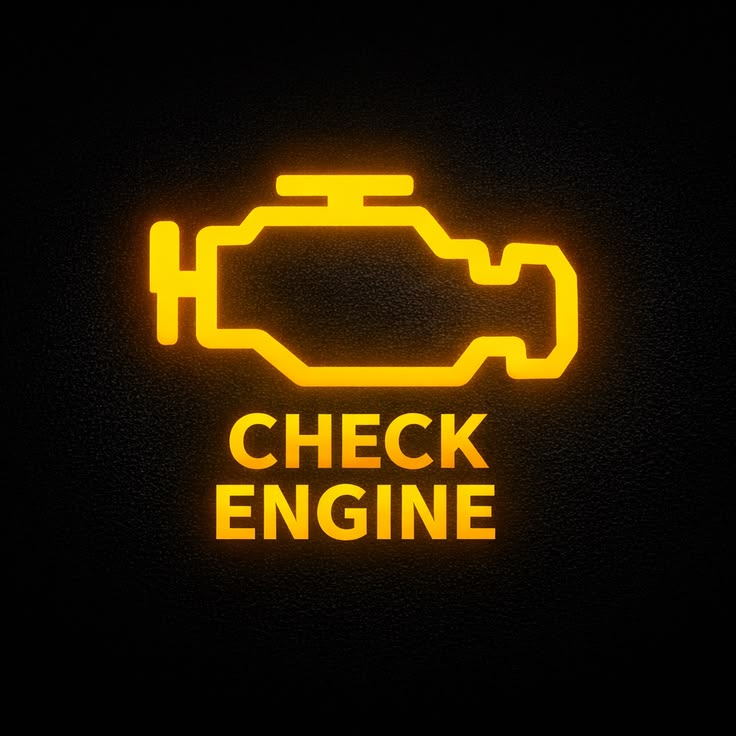
Colour guide
- 🔴 Red: serious. Stop safely as soon as you can.
- 🟠 Amber/Yellow: a fault or service needed soon.
- 🟢 Green/Blue: a system is on (lights, indicators, cruise).
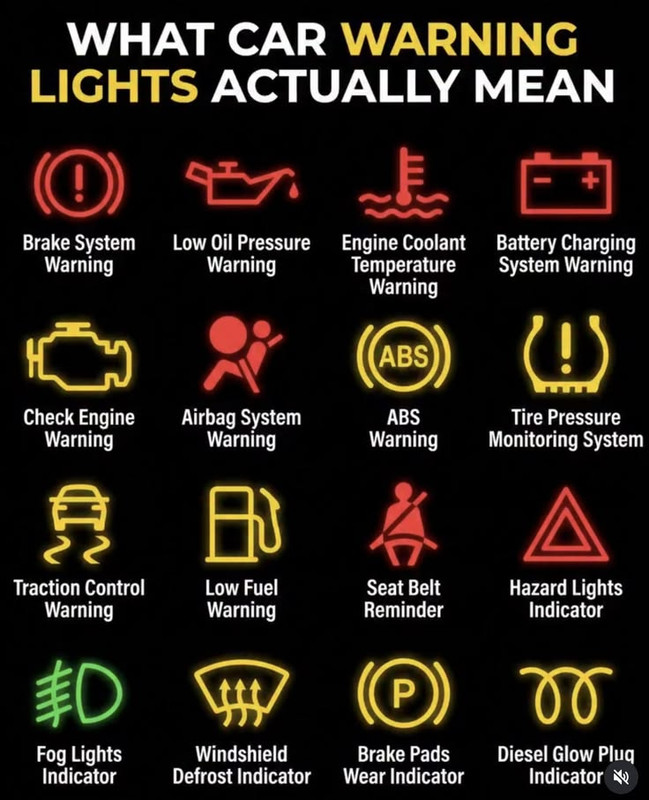
Important lights and what to do
- Oil pressure (oil can): stop the engine immediately and check oil level. Do not drive.
- Battery: charging fault (alternator, belt or battery). Drive carefully to a workshop; the car may die soon.
- Engine temperature / coolant: overheating. Stop, switch off and let the engine cool before opening anything.
- Brake warning: low brake fluid, handbrake on or brake fault. Check the handbrake first; if still on, do not drive.
- Check engine: steady means a fault is stored (get a scan). Flashing means a serious misfire; reduce speed and stop driving soon.
- ABS: normal brakes work, but anti-lock does not. Get it checked.
- Airbag: the airbag system may not work in a crash.
- Tyre pressure (TPMS): a tyre is low. Check and inflate.
- Seatbelt: someone is not buckled up.
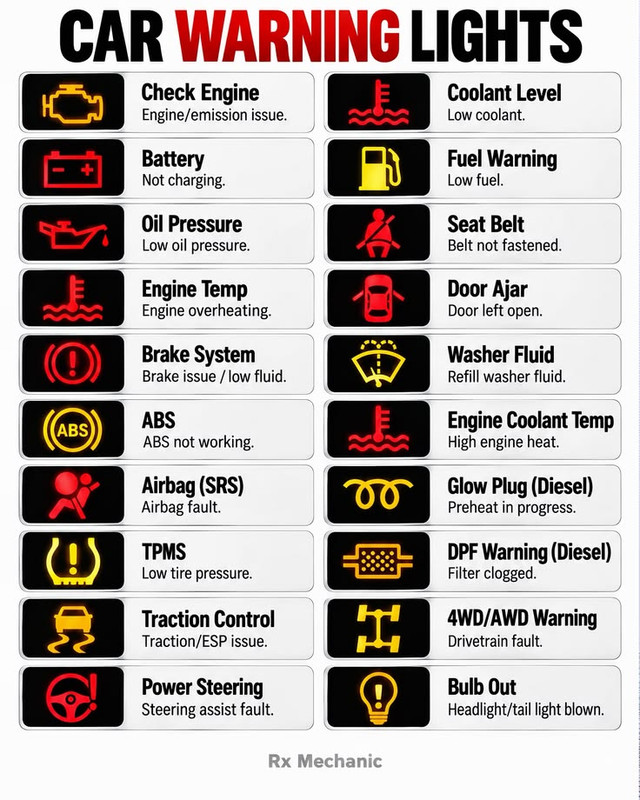
⚠️ Safety: Do not ignore red lights or a flashing check-engine light. Switching the light off or removing a bulb does not fix the problem.
When lights stay on after starting
All lights turn on briefly when you switch on the ignition, then go out. Any light that stays on means the car has stored a fault, and a scan tool will read the cause.